


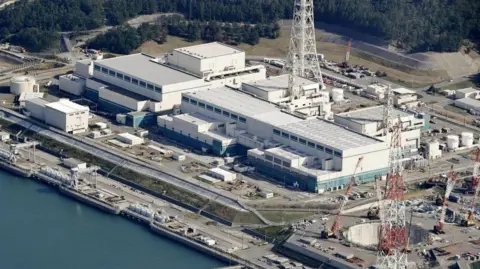
Officials are moving toward authorizing the restart of the world's largest atomic energy station—marking the initial occasion it would be running since the catastrophic 2011 Fukushima event.
Hideyo Hanazumi, leader of the Niigata area where the Kashiwazaki-Kariwa nuclear facility is situated, announced he has authorized for the limited resumption.
The plan to restart activities at the plant, managed by the Tepco utility firm, still needs approval from the regional legislative body and the Japanese nuclear oversight body before it can advance.
If approved, it would be the initial instance Tepco would be permitted to restart nuclear reactor operations in Japan since its Fukushima plant suffered a core meltdown following a massive wave.
Local Citizens Divided on Restart
Local inhabitants in Niigata are of differing opinions over whether the facility should resume operations or not.
The governor stated at a news conference on Friday that his determination would be discussed in the final month of the year at a local government meeting, where he would seek the body's consent.
The consent would be for the recommencement of functioning at the facility's No 6 reactor, then the seventh reactor.
Background and Business Reconstruction Plan
The recommencement of functioning at the facility is part of Tepco's business reconstruction plan after the Fukushima nuclear disaster, which was caused by a massive 9.0 quake and massive tsunami.
When the station's units were flooded by the tidal wave, it resulted in radiation to leak out and required 150,000 people to be moved from the region.
The Japanese government directed all its atomic energy facility units to be shut down in that year after the catastrophe. Afterward, 14 reactors have resumed operations.
The company was instructed to pay massive sums in damages to those harmed and is also covering the plant's decommissioning costs.
Public Opinion and Concerns
A survey released by the local government in the previous month showed that 50% of its residents favored the plant's restart, while 47% were opposed. It also suggested that almost seven in ten of residents in the prefecture were worried about the utility managing the plant.
Energy Goals and Future
The recent ruling illustrates a inclination among some in Japan to progress to expanded reliance of atomic power to cut reliance on traditional energy sources, as the country seeks a objective of net zero carbon emissions.


